
Repair of VAZ-2121
The VAZ-21213 and its variants are off-road passenger cars. All wheels are permanently driven (non-disengageable all-wheel drive), and there is a center differential lock. The body is a monocoque, all-metal, welded unit. The engine is a four-cylinder, in-line, gasoline, four-stroke engine; the engine is mounted in the front, longitudinally. The VAZ-21213 is equipped with a 1.7-liter carbureted engine, the 21213 model, while the VAZ-21214 is equipped with a 21214 engine of the same displacement with multipoint fuel injection. (Previously, the VAZ-21214 was equipped with a 21214 engine with central fuel injection and a microprocessor-controlled ignition system.) The VAZ-21215 (sold for export) is equipped with a 1.9-liter XUD-9SD diesel engine from the Peugeot-Citroën concern.
VAZ-21214 vehicles are equipped with a three-component neutralizer emission control system.
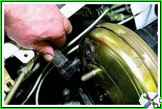
When the vacuum booster fails, the force on the brake pedal increases significantly, which negatively affects vehicle control.
If the force on the pedal during braking has noticeably increased, check the brake booster on a stationary vehicle
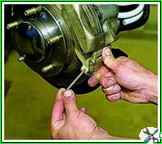
Disassembling the front brake mechanism
Hang up and remove the front wheel.
- How to replace brake tubes and hoses Niva VAZ-21213
- How to remove and check the rear brake pressure regulator VAZ-21213
- How to replace and adjust the handbrake cable VAZ-21213
- How to remove and install the brake pedal of a VAZ-2121
- How to remove the instrument cluster of a VAZ-2121
- Replacing and adjusting headlights of a VAZ-2121 car


